Intuition or Anxiety? How to Tell the Difference When You’re Seeking Guidance
When you’re trying to make a decision, interpret a sign, or understand a charm reading, one question can stop you in your tracks:
The body content of your post goes here. To edit this text, click on it and delete this default text and start typing your own or paste your own from a different source.
Is this my intuition talking…or is this anxiety?
It’s an important question because both can feel powerful. Both can get your attention quickly. And both can influence what you think you should do next.
The difference is that intuition often offers information, while anxiety tends to demand certainty.
Learning to notice that distinction can make intuitive practices like charm divination much more useful—not because a charm gives you all the answers, but because it can help you slow down long enough to hear your own response more clearly.
What Is Intuition?
Intuition is the ability to recognize or understand something without consciously reasoning your way through every step.
It may show up as:
- a quiet sense of knowing
- an immediate association
- a feeling of recognition
- a subtle physical response
- a thought that appears before you begin analyzing
- a symbol, image, word, or memory that suddenly feels meaningful
Intuition doesn’t always arrive dramatically.
Sometimes it’s simply:
“That matters.”
“Pay attention to this.”
“Something about this doesn’t feel right.”
Or:
“I don’t know why yet, but this feels like the direction I want to explore.”
That quieter quality is one reason intuition can be easy to miss.
What Does Anxiety Feel Like?
Anxiety often wants an answer right now.
Instead of offering information, it may begin generating possibilities:
But what if this happens? What if I choose wrong? What if the charm means something bad? What if I miss the sign? What if I regret this?
One concern produces another, and suddenly you are no longer noticing what you feel.
You’re trying to eliminate every possible risk.
That’s an important distinction.
A simple way to think about it:
Intuition tends to notice. Anxiety tends to spiral.
That doesn’t mean intuition always feels peaceful or anxiety is always obvious. An intuitive realization can absolutely be uncomfortable.
But discomfort and panic are not the same thing.
Here’s a simple comparison:
Intuition
- Often feels clear or simple
- May arrive as one thought or impression
- Can be uncomfortable without demanding immediate action
- Usually leaves room for choice
- Focuses on what you notice now
- Can remain consistent after you pause
Anxiety
- Often feels complicated or repetitive
- Generates multiple “what if” scenarios
- Often creates urgency
- Often feels like you must do something
- Focuses heavily on what might happen
- May intensify the more you analyze
There is no perfect formula, but this gives you something useful to observe.
And observation matters more than getting the label exactly right.
Instead of immediately asking:
“Is this my intuition?”
try asking:
“What am I noticing before I start explaining it?”
That small change matters.
Your first response might be:
The key makes me think of an opportunity.
Then your analytical mind arrives:
But what if it means I’ve missed an opportunity? What if the door is locked? What if I’m supposed to leave? Maybe it means…
Notice the shift?
The first response was information.
Everything afterward may still contain useful insight—but now interpretation has entered the conversation.
That’s not wrong.
It’s simply helpful to know when it happened.
How Charm Divination Can Help You Practice Intuition
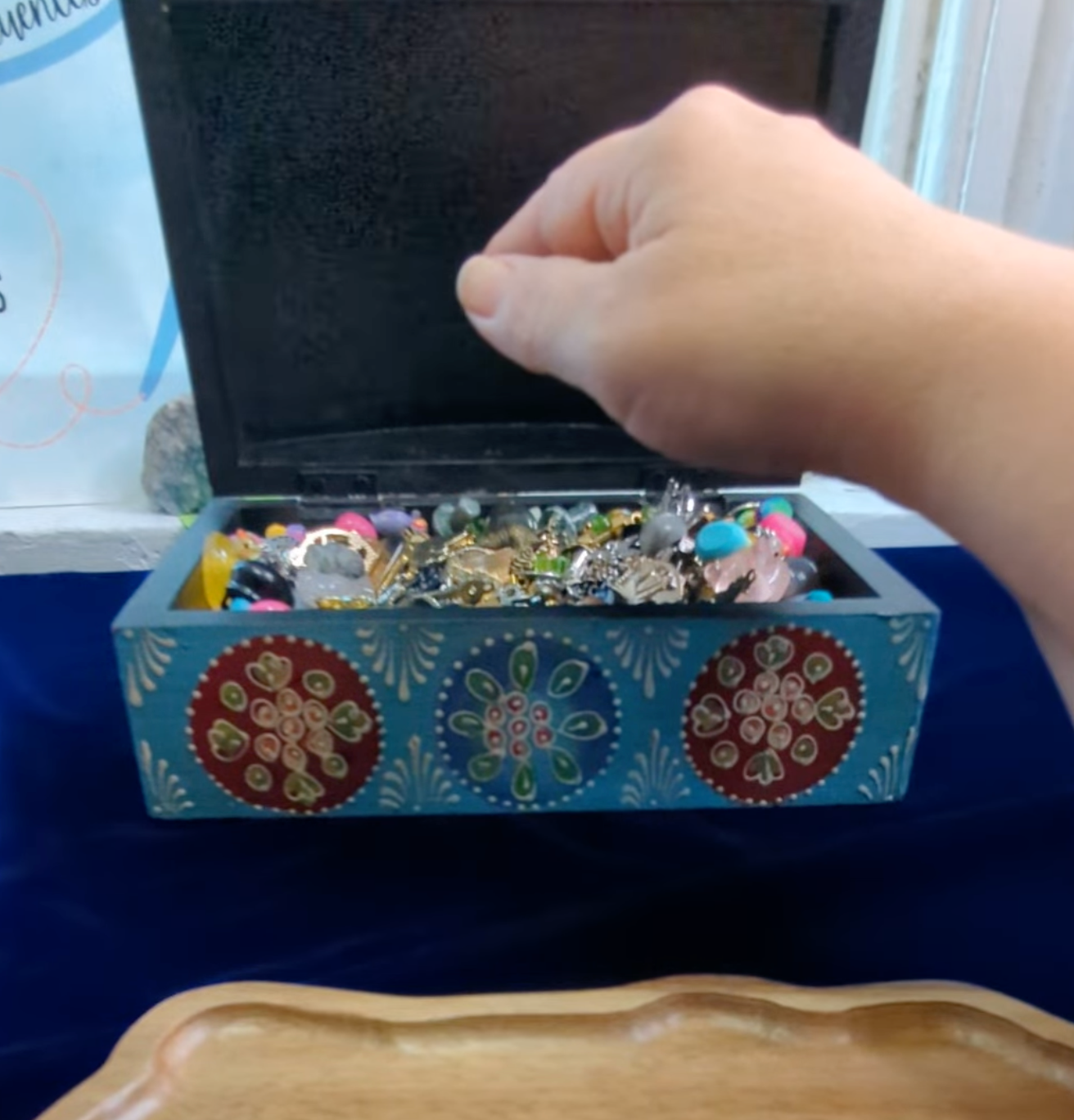
One reason I love charm divination is that it gives intuition something tangible to respond to.
You’re not sitting in a room demanding that your intuition suddenly produce a profound message from nowhere.
You have a symbol in front of you.
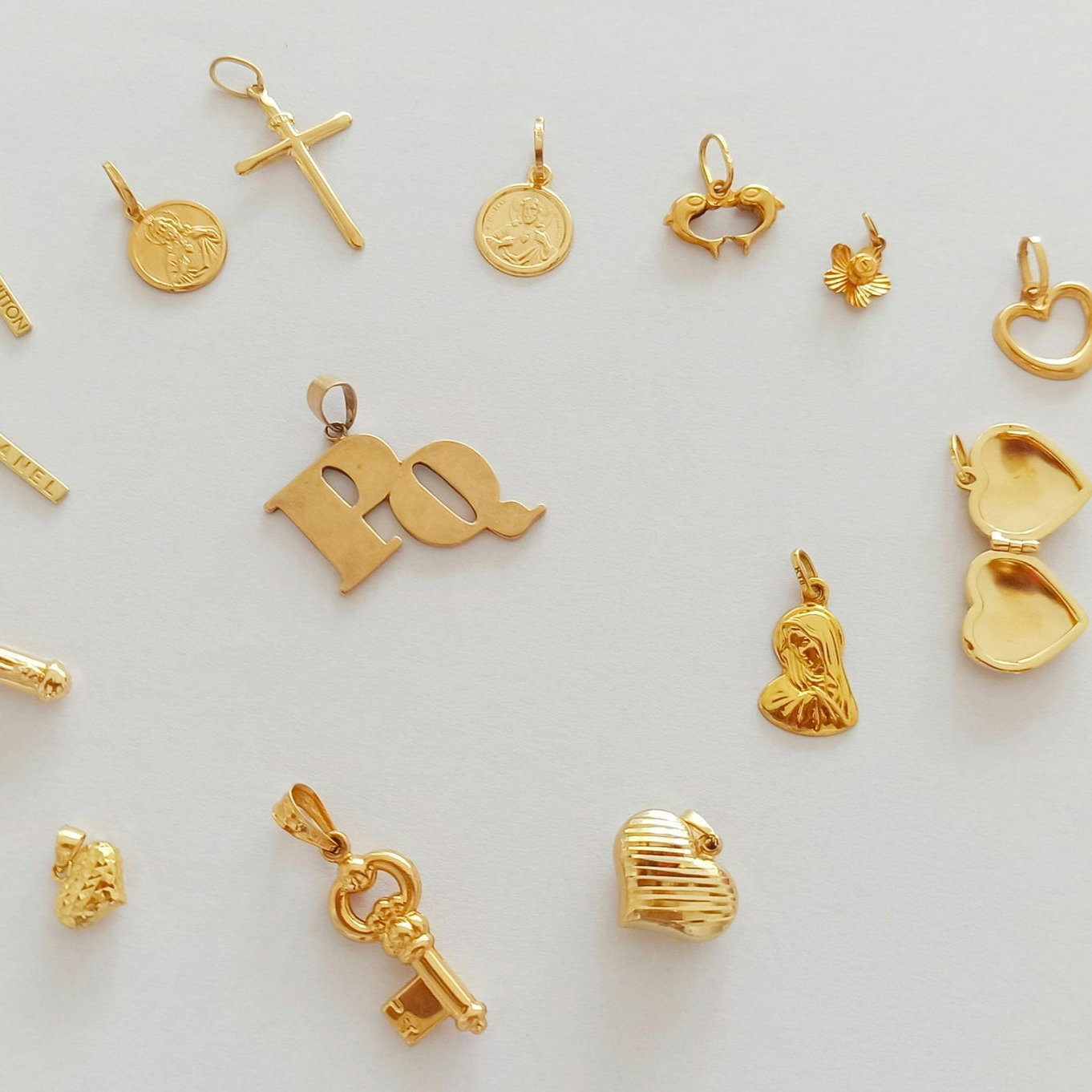
Maybe you pull a key.
Its traditional meanings might include opportunity, access, solutions, or new beginnings.
But before you look up the meaning, you might notice:
My grandmother had a key just like this.
Or:
I immediately thought, “There’s another way in.”
Or even:
I don’t like this charm today.
Those reactions are worth noticing.
At Destiny Charm Divination, I use traditional symbolism as a starting point, while also paying attention to the question, surrounding charms, placement, personal associations, and intuition.
That means you don’t have to choose between “the official meaning” and “what I felt.”
You can explore both.
If you’re new to the practice, you can also read How to Read Charms for Intuition: A Gentle Beginner Method, which walks through a simple process using first impressions and reflection.
Try This: The 60-Second Intuition Check
The next time you pull a charm—or find yourself looking for guidance—try this before interpreting anything.
Step 1: Pause
Take one slow breath.
You’re not trying to empty your mind. You’re simply interrupting the rush to find an answer.
Step 2: Notice your first response
Ask:
What did I notice first?
A word?
Feeling?
Memory?
Physical sensation?
Image?
Association?
Write it down without correcting it.
Step 3: Ask what happened next
Did your mind begin producing explanations or possible outcomes?
That can help you notice the difference between the initial signal and the story that followed it.
Step 4: Look at the traditional meaning
Now explore the symbol itself.
You can use the growing Charm Meanings library or start with my guide to 25 Common Charm Symbols and Their Meanings.
Ask:
What connects between the traditional meaning and my first impression?
That intersection is often where the interesting insight lives.
Step 5: Wait before acting
Not every intuitive impression requires immediate action.
Sometimes the most useful response is:
“Interesting. I’m going to notice what else comes up.”
That removes the pressure to turn every symbol into a command.
Three Questions to Ask When You’re Unsure
When you can’t tell whether you’re hearing intuition or fear, try these:
1. Is this information—or a prediction?
“I don’t feel comfortable with this choice” is information.
“This will definitely go terribly and ruin everything” is a prediction.
Those are very different statements.
2. Does this thought allow me to pause?
Intuition usually survives a pause.
You can walk away, sleep on something, journal about it, or return tomorrow.
Anxiety often insists:
Decide now. Fix it now. Know now.
3. Am I looking for guidance—or certainty?
This may be the most important question.
Guidance can help you take a next step.
Certainty asks you to know the entire outcome before you move.
Most intuitive practices are much better at supporting the first than providing the second.
What If My Intuition Is Wrong?
This is where intuition development can become unnecessarily stressful.
You are not taking an intuition exam.
If you interpret a symbol one way today and understand it differently later, that doesn’t mean you failed.
You learned something.
Intuition develops through noticing patterns over time.
Keep track of:
- what you initially sensed
- what you thought the symbol meant
- what happened afterward
- whether your interpretation changed
- what you learned about your own symbolic language
That’s how self-trust grows.
Not by being right 100% of the time.
By becoming more aware of how you know what you know.
Your Personal Symbol Language Matters
Imagine two people pull a butterfly charm.
One immediately thinks:
Transformation.
The other thinks:
My mother.
Neither response needs to be wrong.
Symbols carry collective meanings, but they also carry memories, relationships, cultural associations, and personal experiences.
That’s why I encourage people learning charm divination to explore traditional meanings while also developing their own symbolic language.
You can begin with 25 Common Charm Symbols and Their Meanings and then notice which meanings shift or expand for you over time.
Can Charm Divination Tell Me What I Should Do?
I prefer to think of charm divination as a tool for reflection and guidance, not an authority that makes decisions for you.
A charm can ask:
What aren’t you noticing?
What deserves your attention?
What possibility haven’t you considered?
What feels most aligned right now?
That keeps your power where it belongs—with you.
The goal isn’t to become dependent on charms for answers.
The goal is to become better at hearing yourself.
That philosophy is at the heart of Destiny Charm Divination: receiving guidance while strengthening your own intuition and self-trust. You can explore that approach on the Start Here page.
Want to Practice Your Intuition?
If this is something you want to strengthen, practice matters more than perfection.
You can begin very simply:
Pull one charm.
Notice your first response.
Write it down.
Explore the traditional meaning.
Ask one reflective question.
Then go live your life.
You don’t have to force an answer.
Let the symbol stay with you.
Sometimes understanding arrives immediately.
Sometimes it unfolds later.
Want a monthly way to practice?
The Charm Divination Dispatch Mail Club includes intuition-building activities and charm-based experiences designed to help you practice noticing and trusting your own responses over time.
Looking for guidance around something specific?
A personalized Charm Reading uses charm symbolism, intuition, and reflection to explore the messages and insights surrounding your situation.
New to all of this?
Begin with Start Here and choose the path that feels right for you.
Frequently Asked Questions
How do I know if something is intuition or anxiety?
Intuition often arrives as a relatively simple impression or sense of knowing, while anxiety is more likely to create repetitive thoughts, urgency, and multiple “what if” scenarios. Neither always feels calm, so focus on patterns rather than a single sensation.
Can anxiety interfere with intuition?
It can make intuitive signals harder to notice because anxious thinking may generate many competing thoughts. Pausing, writing down your first impression, and returning to it later can help you separate the initial response from later analysis.
Does intuition always feel calm?
No. Intuition can point toward something uncomfortable. The difference is often that the message itself remains relatively clear, while anxiety tends to expand into escalating possibilities or urgency.
Can charm divination help develop intuition?
Charm divination can be used as an intuition practice because symbols give you something concrete to respond to. You can notice your first associations, compare them with traditional meanings, and track patterns over time.
Should I make decisions based only on a charm reading?
No. Charm divination is best used as a reflective tool that can add perspective to a situation. Important financial, medical, legal, or other high-stakes decisions should include appropriate professional advice and real-world information.
Final Thought
Your intuition does not have to shout to be useful.
Sometimes it arrives as a tiny nudge.
A strange association.
A symbol you can’t stop thinking about.
A quiet:
“Look here.”
You don’t need to force it into certainty.
Notice it.
Explore it.
Stay curious.
And over time, learn what your own inner voice sounds like.
Destiny Charm Divination
Offering Divine Guidance, Intuition Growth